TRUNKS
"A herd isn't where you come from. It's who answers when you call."
Progress · 29 July 2026 · first pass
What it is
A lost baby elephant crosses a continent to find his family — and discovers that the song he's been collecting along the way is the only thing that can call them back.
Herds in this world don't navigate by landmarks. They navigate by the Walking Song: a long, low migration-song passed matriarch to matriarch, one verse per stretch of country. Trunks was separated before he learned it. He was still on the third verse.
So the story goal and the progression system are the same object. Every collectible is a memory, and every memory is a piece of the road home.
Where it stands
There is a playable vertical slice of World 1 running in Unity 6.5. It isn't an art demo — it's the proof that the systems all nine worlds need are running together.
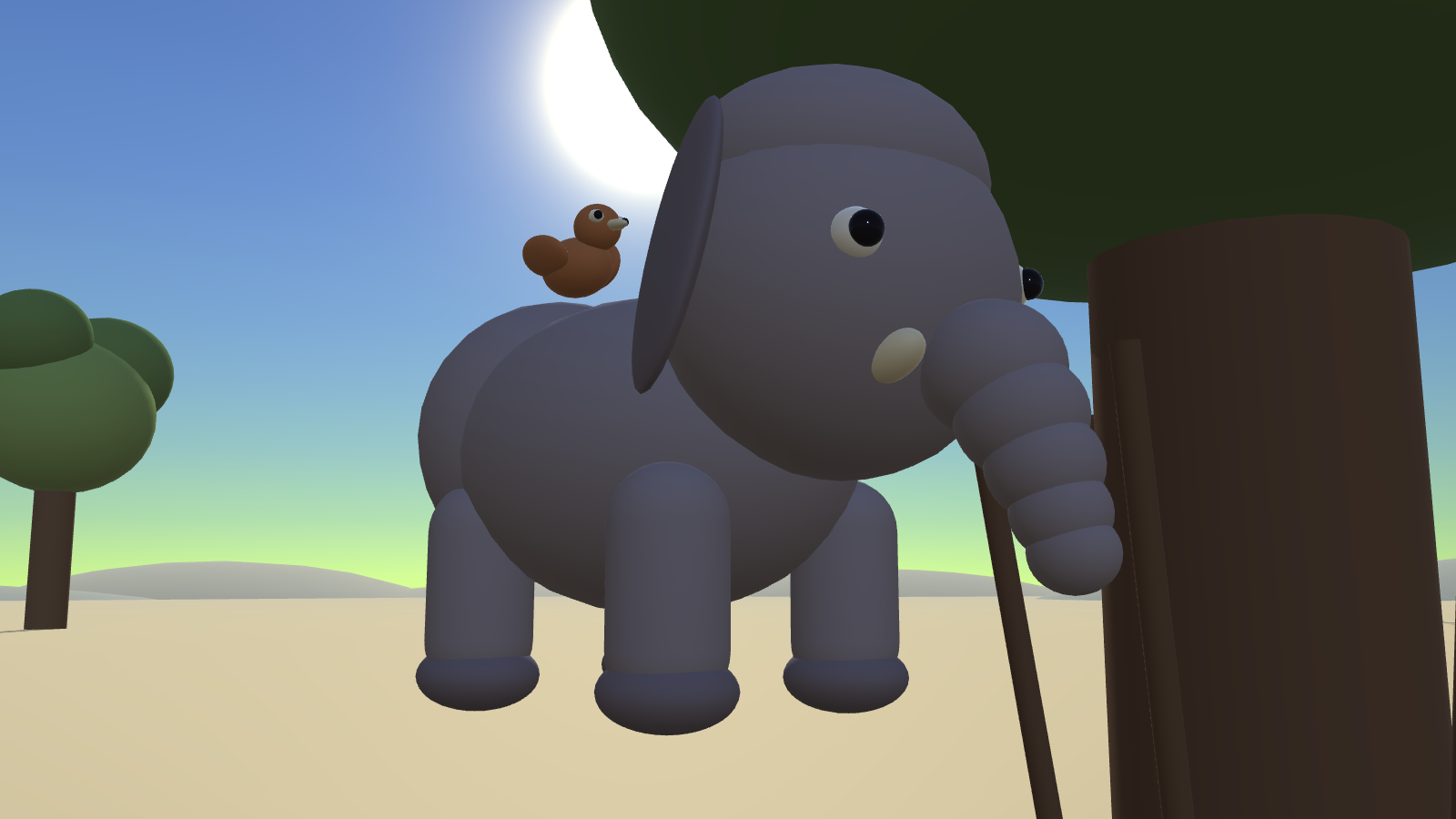
- The Listening — the infrasound pulse. The world goes quiet and a pulse travels out through the ground, revealing hidden paths, buried things and hollow rock. It is the signature mechanic.
- The trunk — grab, charge, throw, drink, spray. It fumbles 12% of the time on purpose: the clumsiness is the tutorial, and it goes to zero as the worlds progress.
- Courage, not health — Trunks doesn't die. When his courage runs out he curls up, ears over his eyes, and the last banyan takes him back.
- Nothing dies — whatever attacks you gets picked up and thrown into water or mud. It shakes itself off and slinks away, offended.
- Not one word — no dialogue, no voice, no subtitles. The interface has no text at all: pictograms are rasterised at runtime. Zero localisation cost.
Play it
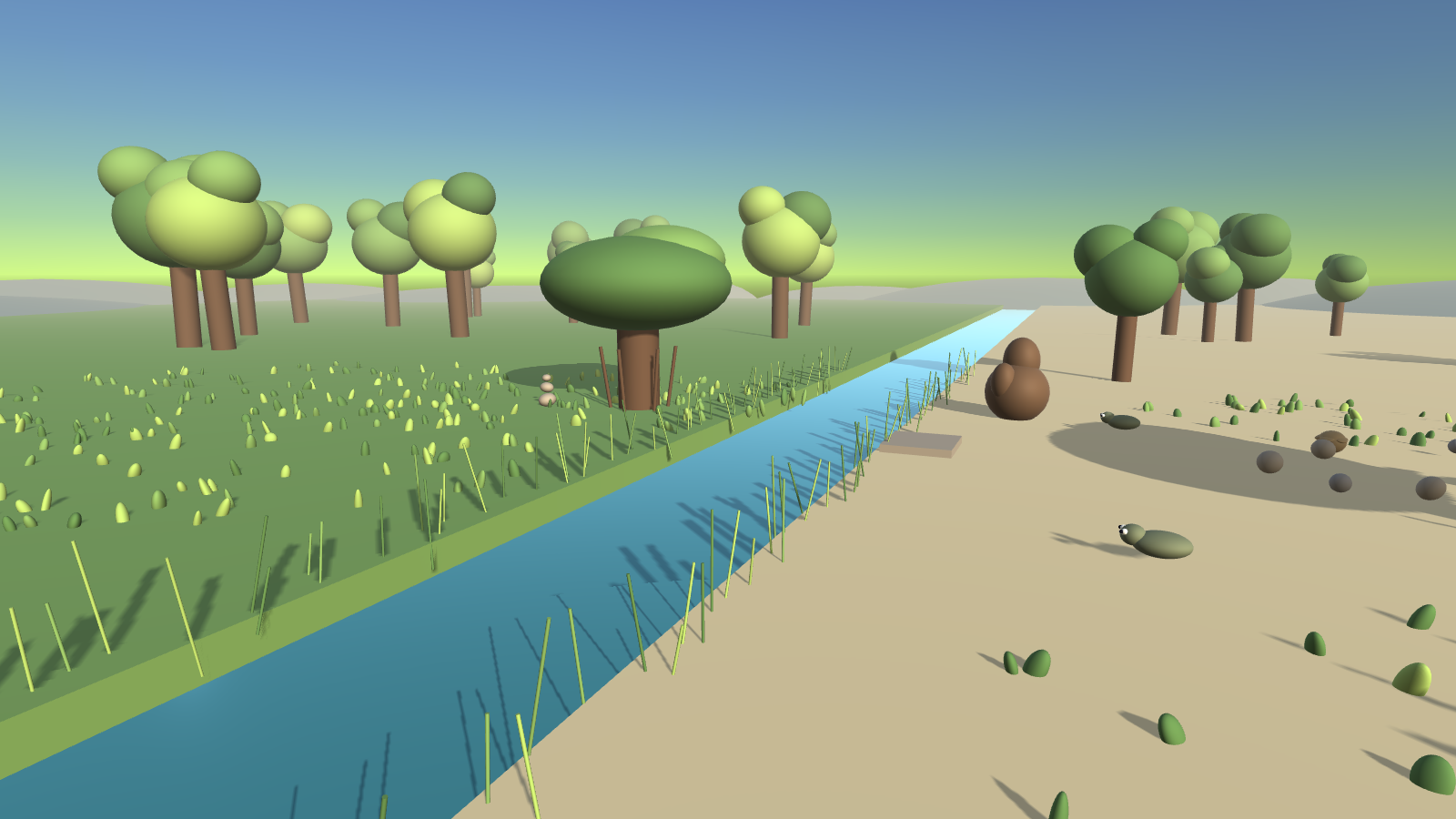
The slice, in the browser. Keyboard and mouse only — there are no touch controls yet, so this won't work on a phone. It is a gray-box: everything you see is a Unity primitive.
- WASD walk
- Shift run
- E grab · hold to charge · release to throw
- Q drink & spray
- F hold to Listen
Try, in order: throw a stone in the river · throw the pest in after it · throw Bramble at the termite mound · hold F on the flat rock at the water's edge · cross · then look at what's stacked on the far bank.
How it's built
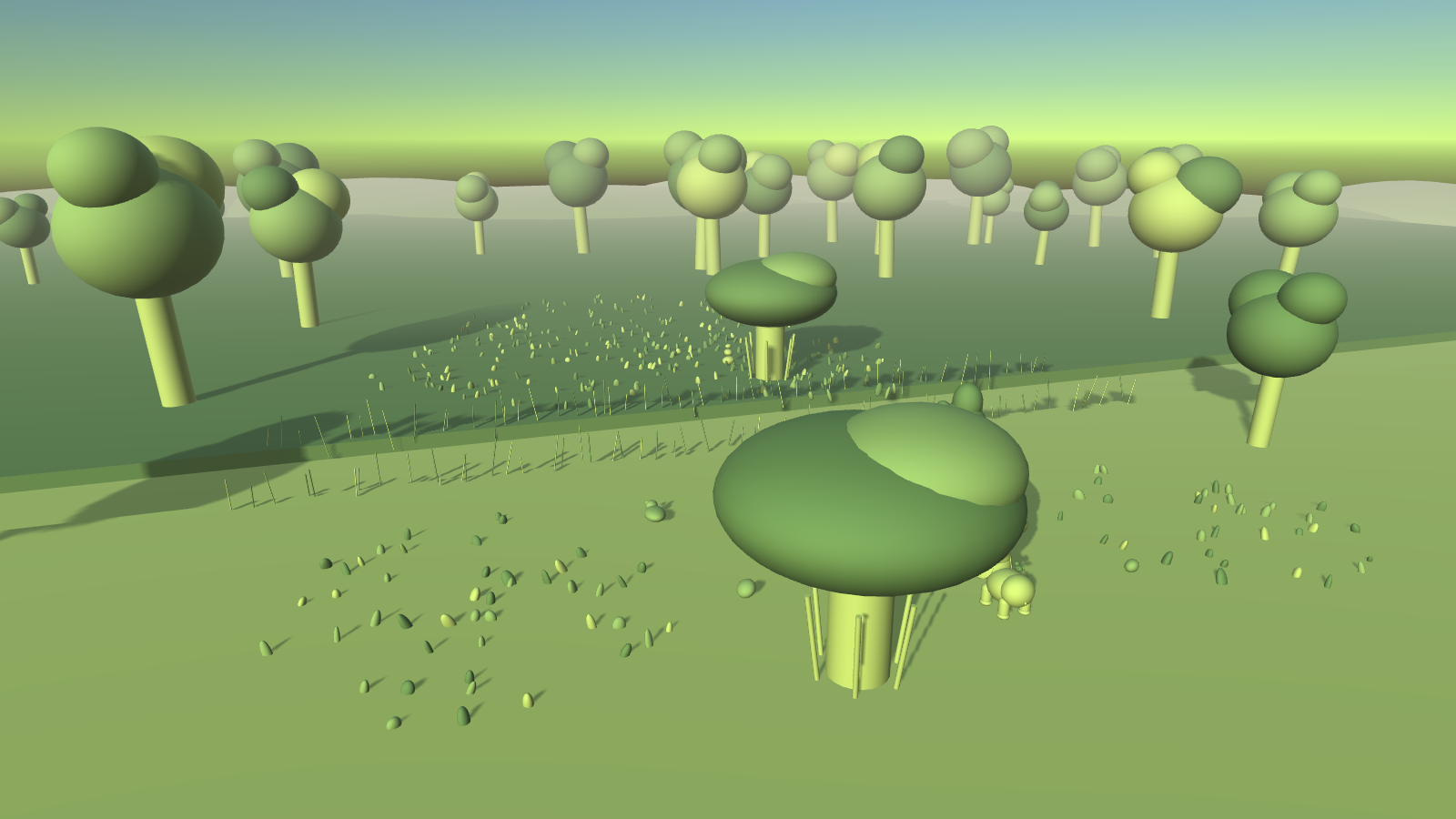
The scene isn't hand-authored: an editor script generates it, so the level is a readable diff instead of a binary file nobody can review. Everything runs without opening Unity — compiling, generating the level, capturing screenshots and exporting to WebGL are all terminal commands. That's what makes it possible to iterate on the look by seeing it in the same session, instead of imagining it.
What's next
- Art direction. The reference is Horton at Pixar's level of detail. What exists today is the foundation of shape and light; the jump to that finish means real modelling, materials and fur.
- Wordless legibility. Right now the termite mound doesn't look breakable and the verse isn't visible from a distance. In a game with no text, everything the player needs to know has to be said by the image.
- Audio. The song is the spine of the game and it doesn't play yet. The verses already layer as simultaneous tracks; the tracks are missing.
Open edges
- The Listening's desaturation is a flat overlay; the real one is a URP Renderer Feature.
- No touch controls, so there's no phone build yet.
- The camera orbits on raw mouse delta, with none of Cinemachine's damping.
- Worlds 2 through 8, the prologue and the finale are not built.